Lecture for the London Parks and Gardens Trust, 7-8pm, 12 November 2012 at The Garden Museum SE1 7LB (map)
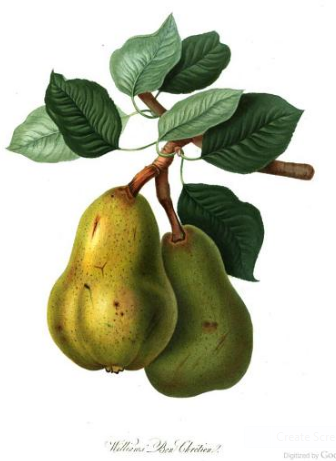
Val Bott will be giving a lecture about some of the nursery gardeners of the Brentford & Chiswick area between 1680 and 1820. Her research has used local history and family history to discover the links between the gardening families and what they grew, rangin from patent elms, through pineapples to Williams pears.
Tickets are available from the London Parks and Gardens Trust at £8 for LPGT members abd Museum Friends and £9 for others.
In the Royal Horticultural Society’s Wisley library is a hand-coloured copy of Hugh Ronalds’ handsome book on apples, Pyrus Malus Brentfordiensis, published in 1831. The illustrations were lovingly prepared by his daughter, Elizabeth, a talented artist who may personally have coloured a number of copies of the book. I was delighted to go to see it in the company of two visitors from Canada, one of whom is a Ronalds descendant; we had been sharing our research discoveries by email for some time! Their visit also took in a gentle exploration of Brentford, Isleworth and Little Ealing to locate the Ronalds’ garden grounds.
Hugh Ronalds senior
Hugh Ronalds senior (1726-1788) was a Scot from Moidart, Inverness-shire. He was one of the many Scottish gardeners who came to work in our area after the Duke of Lauderdale became established at Ham, James Johnson at Orleans House and the Duke of Argyll at Whitton Park. All these influential Scotsmen invested heavily in their gardens.
Ronalds house is at the extreme left of this print of St Lawrence’s
Hugh Ronalds senior was certainly working in New Brentford by the late 1740s and living in The Butts by 1760. He and his wife Mary had seven children; she died aged 77 in 1799. Several generations of the family worked as nurserymen and seedsmen here for well over a century. A number of them were buried at St Lawrence’s Church but they were non-Conformists, actively involved in the management of Brentford’s congrgational chapel where their children were baptised. In the 1770s Hugh senior was living in a timber-framed house called Lamberts (and sometimes referred to as Noy’s House after a later owner) next to St Lawrence’s, with his primary nursery of 2 acres next door between the church and the Brent (later the canal).
He used an old building in garden ground at Brentford End, on the south side of the London Road in Isleworth as a seed store. A sketch in the London Metropolitan Archives shows this early brick structure which had been the separate kitchen of a grander house. In front of this delapidated working building a gardener brings stalks and sprays in a barrow while another beats stalks on a cloth, winnowing out the seeds.
detail from the sketch of Ronalds’ seedhouse
Hugh senior’s will mentions the properties in New Brentford and in Isleworth, which he and his sons Henry Clarke Ronalds (1757-1804) and Hugh junior (1759-1833) had worked in partnership for many years. Their stock included trees, plants, shrubs, flowers and seeds. Hugh senior provided for his widow and all four of his surviving sons in such a way that the partnership could continue but Henry and his widowed mother soon moved to Coventry.
Hugh Ronalds junior
The most famous member of this gardening family was Hugh Ronalds junior (1753-1834). He was given considerable responsibility for work in the business from the age of 14 and later managed it with his sons John (1792-1850) and Robert (1799-1880). His wife, Elizabeth Clarke, was from another local family and they had ten children. Active in local affairs, he had shares in the Grand Junction Canal Company, was on the committee of the Brentford Volunteers 1803-6, and became a council member of the Royal Horticultural Society.
Garden ground at Little Ealing leased from Col Clitherow of Boston Manor by Hugh Ronalds jnr.
Hugh junior ran his father’s nursery beside St Lawrence’s (Robert Ronalds, the last of this generation, still occupied it when he died in 1880), another between The Butts and Boston Manor Road, land at Little Ealing which is now a recreation ground and also the Isleworth nursery where the cemetery now stands. At one stage he offered part of his land-holdings as trial grounds for the use of the Horticultural Society but they chose instead to lease land from the Duke of Devonshire at Chiswick.
The apple book
His book, Pyrus Malus Brentfordiensis or A Concise Description of Selected Apples appeared in 1831. By this time Hugh Ronalds junior was 78 years old and had been encouraged by fellow members of the Royal Horticultural Society to write the book. In it he described each variety, gave information about its seasonality, storage capability and uses, and acknowledged other nurserymen who had introduced or improved apple varieties, revealing his wide network of contacts. He was recording a lifetime’s work, and perhaps marking the transition from gardening skills to the academic study of horticulture. His desire to share his expertise is underlined by his statement in the book that he would welcome visitors who wanted to discover more at his nursery . His obituary in Loudon’s Gardener’s Magazine says that he was “well skilled in fruits” and had “great skill in raising flower seed for which the nursery has long been celebrated”.
Specialist knowledge and reputation
The Ronalds’ business was based upon deep specialist knowledge. Hugh Ronalds junior assembled a herbarium of plant samples from Kew Gardens but its whereabouts are not now known. Loudon’s Gardener’s Magazine mentions the apple trees, stating in 1829 that “for several years he [Hugh junior] has studied them at all seasons and . . . his descriptions of the different varieties, of the hardiness or delicacy of the tree, its blossom, leaves, fruits, time of ripening, keeping, are copious and voluminous. We have strongly urged Mr Ronalds to publish a selection of engravings and descriptions”.
As seedsmen the Ronalds must have had considerable understanding of pollination and fertilisation, as nurserymen they needed skill in growing and protecting their plants as well as understanding soil and climate. On the evidence of their letters, invoices, wills and the book, these were literate and numerate men who wrote well. They knew how to manage their business and made arrangements for their children to sustain it. They sold garden equipment, for example, supplying to Kew Gardens barrows, brooms, implements, mats and stationery. The sheer scale of their nursery business at its peak is shown by their ablity to supply more than 14,000 shrubs for the new Kensal Green Cemetery.
Some surviving invoices have printed headings and an engraved logo of an acorn. They are neatly written with details of the plants or seeds supplied. Hugh Ronalds junior wrote of the difficulties involved in getting plants safely to port in England, and the Banks Archive in the State Library of New South Wales includes invoices for plants which he had supplied to Banks for the voyage of the Porpoise to Australia. Sir Joseph Banks lived only on short distance away at Spring Grove, Isleworth, and would have trusted Ronalds whom he knew personally.
apple from Sir Joseph Banks estate by Elizabeth Ronalds
Social standing
The Ronalds’ children married into families with substantial business interests in Brentford, including the Montgomreys who were also of Scots origin.The Ronalds also supplied upper class clients like the Clitherows of Boston Manor (for more than 50 years), the Childs of Osterley Park and the Dukes of Devonshire at Chiswick House. Indeed the Duke of Devonshire was so struck by the quality of a bed of late tulips at the nursery that he paid £500 for it. They maintained a circle of significant gardening contacts which included William Aiton, another Scot, who ran Kew Gardens and was one of Hugh Ronalds senior’s executors.
Both Griffiths and Hugh Ronalds were parties to a chapel lease in 1792, along with William Aiton and other men from the locality. In fact, Hugh Ronalds senior and his family contributed funds for building the new chapel in Boston Manor Road at the end of The Butts. Hugh junior was a chapel trustee from 1781 until 1825 and his brother John became treasurer in 1837.
William Hugall’s apprenticeship indenture, 1798, with Hugh Ronalds jnr (Thomas Layton Collection)
These were also generous people. A 1798 indenture records Hugh Ronalds junior passing on his skills by taking as apprentice a poor boy funded by local charities.The Ronalds’ home and nursery beside St Lawrence’s suffered serious damage in the 1841 Brentford Flood but several family members made donations to support those made homeless by the disaster. John Ronalds left bequests to his skilled foreman and his son, both named William Wareing, and one of the witnesses to his will was his servant, Eliza Humphreys.
Long-established gardening families like the Ronalds contributed to the high reputation of this area for horticulture, but they also played a significant part in the life of the town. A great deal of effort by members of Brentford Voice and the Brentford & Chiswick Local History Society, with support from descendants in Canada and Australia, and a sensible council officer they have been commemorated. Ballymore, the current developers of Brentford, have named a new road running across the site of their former home beside St Lawrence’s Church after them and the family tomb, in the nearby churchyard has been repaired and retained in the new garden behind the church whereas many other memorials have been cleared away.
For the historian, the practice of naming sons after fathers and/or grandfathers can cause no end of confusion. This has certainly been the case with a family of Scots gardeners called Kennedy.What follows is an attempt to clarify which gardeners called Lewis Kennedy had links with the Chiswick area.
A Lewis Kennedy prepared Notitiae, elegant notes and sketches, which survive in the archives at Chatsworth. These proposed improvements to the estate immediately to the east of the grounds of Chiswick House, which the 6th Duke of Devonshire purchased in 1812. This had been the property of Sir Stephen Fox, who invested in a magnificent house and grounds there in the early 1680s. It passed through successive owners after Fox’s death in 1716. From 1758 it was the home of the Earl and Countess of Morton and was later known as Moreton Hall. The Duke’s purpose was to enlarge his gardens and the Hall was soon demolished. His enhancements include the Italian garden and conservatory, the home of the Chiswick House Camellia Festival.
This Lewis Kennedy was born in 1789 and, despite his youth, had already worked for the Empress Josephine in France, obtaining permission to travel and export plants to France during the Napoleonic Wars. [This contract was almost certainly facilitated by a wealthy London merchant, George Hibbert (1757-1837), who was an impressive gardener, funding plant hunters and acting as a silent partner in the Vineyard Nursery. He was on intimate terms with Josephine and recommended that Kennedy be engaged to advise her.] The son of John Kennedy (1759-1842), Lewis’s expertise at such a young age must have come from working at the family’s Vineyard Nursery, the famous concern of Kennedy and Lee on the site where the Olympia exhibition halls were later built. John Kennedy was one of seven children, including three sets of twins. Two sons were both baptised Lewis but only the two other siblings – John and Amelia – survived to adulthood. Amelia Emily Kennedy married William Bridgewater Page; he trained at the Vineyard Nursery and in 1815 launched his own nursery in Southampton.
Kennedy’s scheme for Trebartha Castle that was never carried out
Lewis Kennedy (1789-1877) produced albums or “Notitiae” for other clients. In 2011 The Huntington Library in California acquired one of these, for Trebartha Hall in Cornwall. Kennedy’s proposals are set out in 12 manuscript pages, supplemented with 8 watercolor sketches and 5 pen-and-wash vignettes with verses, bound in olive green leather to seduce his client! Kennedy wrote “I have ventured to annex, a small slip of paper to shew the possibilities of Trebartha in the Castle style & at trifling more expence …” Seductive stuff but never implemented!
Another Lewis Kennedy (d 1782), born in Scotland, is said to have established this nursery in the first half of the 1740s with a fellow Scot, James Lee, from Selkirk (1715-1795). Lee had served his apprenticeship with Philip Miller, also a Scot, at the Chelsea Physic Garden and Loudon stated that he had then worked at Whitton Park and on the Syon Estate. John H Harvey suggested that this Lewis Kennedy was grandfather of the author of the Chiswick Notitiae. He identified him also as the Lewis Kennedy who was gardener to Lord Wilmington at Chiswick, when he subscribed to Philip Miller’s Dictionary in 1731, to Furber’s Short Introduction in 1733 and to Rocque’s map of London and Environs in 1741. Lord Wilmington showed his house and garden to Sir John Clerk of Penicuik in 1733; he wrote that he “shewed me all his gardens where there is a vast variety of Trees, Shrubs, plants & flowers…. One Kennedy a Scotsman is Gardiner & has been with him many years. I found the Ananis or pineapple very forward – he has a vast stock of Tulips Hyacinths Anemonies & Ranunculuses…. He has a neat Library for phylosophie & Botanie books of all kinds”.
Thomas Kirton, the local blacksmith, had a forge a short walk from Lord Wilmington’s house (now under the Hogarth Business Park). Kirton had worked for Lord Wilmington at Chiswick and was recommended by him to the Earl of Northampton. Kirton’s will included a bequest of a mourning ring to a Lewis Kennedy in 1755, and it makes sense that this refers to Lord Wilmington’s gardener. (Kirton’s mother, Mary, had kept up the family forge after her husband’s death and her name appears on invoices for smith’s work for Lord Burlington at Chiswick House and in the accounts in the 1720s, amongst the archives at Chatsworth).
The Gentleman’s Magazine, vol xiii, carried a report of the death of another Lewis Kennedy, gardener to the Duke of Bedford on the Woburn estate. Kennedy had cut his throat and died instantly; his suicide note, dated 6 October 1743, was printed in full. It referred to a long period of mental illness and instability, and asked for compassion rather than ridicule, but Kennedy was rational enough to have sorted out practical matters, leaving with his suicide note an IOU from Alexander Brown confirming that he owed Kennedy £10 and also a letter to Brown which asked him to ensure that Kennedy had a decent Christian burial and that his box of possessions should be sent to his nephew who was gardener to the Earl of Northampton.
The Lewis Kennedy who entered into a partnership with Lee soon after his uncle’s tragic death must have been this nephew. He was most likely the son of Thomas Kennedy (brother to the gardener at Woburn) who died in 1721 a few months after his son’s birth.
Sir Stephen Fox’s house was purchased by Lord Wilmington from Fox’s son and inherited by the Earl of Northampton – so the estate which today forms the eastern segment of the grounds of Chiswick House, comprising the Italian garden, the conservatory full of camellias and the series of walled gardens to the north, played a part in the horticultural lives of two of the Kennedys. One managed it for Lord Wilmington (and seems to have gone on to work for its next owner, the Earl of Northampton) and the other, his grandson, made ambitious and audacious proposals for its modification as a young man in 1812-14.
Sources of information:
John H Harvey, Early Nurserymen, Phillimore, 1974
E J Willson, James Lee and the Vineyard Nursery, Hammersmith, Hammersmith Local History Group, 1961 (Eleanor Willson obtained family information from descendants of both the Lee and Kennedy families)
Chatsworth Archives: purchase of Morton Hall, Kennedy’s Notitiae for this estate, and Chiswick House accounts used in R T Spence, Chiswick House and Its Gardens 1726-1732, Burlington Magazine, Vol. 135, No 1085, 1993
Gillian Clegg, Moreton Hall, Brentford & Chiswick Local History Journal no 9 (2000)
Sally Jeffrey, Fox’s “Extraordinarily Fine” Chiswick Garden, Brentford & Chiswick Local History Journal no 15, 2006
The Gentleman’s Magazine, xiii – note about suicide of Duke of Bedford’s gardener
Family history references traced and/or checked via www.ancestry.co.uk
Information from Richard Hewlings, English Heritage about recommendation to the Earl of Northampton.
www.georgehibbert.com– a website about the Hibbert family run by Nick Hibbert Steele
Note: This piece has prompted interest from several descendants of the gardening Kennedys – I am grateful for the information they have passed on and have been happy to share my research. Yesterday I took two of them for a walk around the Italian Garden and the Duke’s Avenue at Chiswick House to explore the design ideas Lewis Kennedy (1789-1877) had conceived in 1814. 2 July 2012
Stepping through the gate in the wall around Hogarth’s House in Chiswick, you leave behind six lanes of roaring traffic. It really does feel like stepping back into the past, even when planes are flying in every 90 seconds towards Heathrow on a warm summer’s day.
T M Rooke's view of the House from the lane; John Allgrove's signboard is fixed to the wall (Hounslow Local Studies)
The House re-opened in November 2011 following a major refurbishment over the previous 4 years. Following a good deal of new research it has been possible to create a new presentation of the House. In the years before it closed for the refurbishment, trustees and volunteers asked visitors to the House what would make a visit more enjoyable. We were especially interested in the response of those who had come for the first time or returned after a long gap because of a special event. There were two strong messages from these discussions. First, they wanted to make sense of Hogarth’s House as a home and, secondly, they wanted to know who else had lived there before and after the Hogarths. Rather than continuing the past practice of using it as a gallery with serried ranks of Hogarth’s prints in black frames, the new presentation reveals the Hogarth household using the House as their second home, away from the noise of Leicester Fields, and tells the stories of their lives, provides information about their friends and neighbours and also reveals the fascinating residents who came before and after them.
It was not, however, part of the plan to refurbish the garden within this project. The double gates at the bottom of the garden have been restored and given back their spherical finials (found in the shrubbery!), and the path from there to the House now provides level access from the pavement outside. This follows the line of a path on the 1865 OS map. But replanting and dealing with the sycamore seedlings in neglected areas has to wait for the time being. My research into the garden in the past will help guide appropriate planting in the future. So what do we know?
The plot was an orchard, probably from the 1670s. It was enclosed from Chiswick’s Common Field by the Downes family who were millers and bakers; they appear int he parish accounts supplying communion bread to St Nicholas Church. Susannah Downes left the plot to one of her sons in 1713 and the new house was completed by 1717. In 1749 the Hogarths bought it from the son of the first occupant, Lutheran Pastor Georg Andreas Ruperti. His substantial library was sold over 8 evenings in 1732 and pleasingly included some gardening books.
The present garden is a distorted triangle and it was already that shape by the time of the first large scale Ordnance Survey in the 1860s. But on John Rocque’s 1745 Survey of London and Environs, there is clearly a rectangular plot. John Philips, a nephew of Mrs Hogarth and her cousin, Mary Lewis, kept a small collection of Hogarth mementoes and wrote notes to go with them. These items and the notes have found their way into Aberdeen City Art Gallery’s collection.
One note reads, ‘In 1759 Mr H increased the size of his garden by taking a lease for 21 years of 264 square foot from the Earl of Morton which made his garden square – The said pce forming two sides of a plain triangle.’ If this was a renewal of a previous lease it may explain the Rocque image for Morton House was next door to the west. [Built by Sir Stephen Fox in 1682-3 Morton House still stood when the property was acquired by the 6th Duke of Devonshire in 1812 in order to extend the grounds of Chiswick House. There he built the conservatory and employed Lewis Kennedy to lay out the Italian Garden; to the north of this three of Fox’s four walled gardens survive.]
It is not possible to recreate Hogarth’s rectangular garden as later developments – most of them aggressively inappropriate offices and industrial structures for the curtilage of a Grade 1 listed house – crowd up against the walls today. However, there is some evidence that the core of the garden’s structure remains.
Detail from Hogarth's view, his house shown in shade.
Hogarth’s own sketch of his House, seen from Chiswick Common Field to the north, was published as a print by his widow in 1782. Tall trees seem to follow the line of the far boundary and the western wall of the garden, with lower fruit trees in front of them. The long wall facing the lane with a gate near the House can be seen. At the bottom of the garden (on the right/west) is a double door giving access to Hogarth’s small carriage house and/or stable with a room above – one of John Phillips’ notes against the print in a scrap book confirms that this was the “paintin room”. The studio was pulled down in the 1870s but a double gate remains here.
Hogarth's House in the 1880s. The mulberry is the largest tree, with a fan trained fruit tree on the wall to the left and two plum trees which survived until the 1930s to the right (Hounslow Local Studies)
The Hogarths would have known the old mulberry tree in his garden, and there are stories that Mrs Hogarth made mulberry pies for foundling children who were visiting them. The tree may date from the original orchard; it has survived bomb damage and old age and gave a good crop of fruit this year, some of which was used in small pies at the re-opening of the House. Most houses of this size would have had a vegetable plot growing pot herbs for the kitchen and Hogarth also had a nut walk where he enjoyed playing ninepins with his friends.
We know nothing about a flower garden here in the Hogarth’s time. However, Mary Lewis’s brother John, a flautist who was related by marriage to the Clitherows of Boston Manor, lived in The Butts in Brentford. Amongst his neighbours was the Swinden family and it is interesting to imagine that Lewises and Swindens knew each other sufficiently well for Mary Lewis to have bought seeds for her garden at Chiswick from Swinden’s catalogue. We may be able to plant some of his flower garden schemes in the future.
When the long connection of Hogarth relatives and friends came to an end in 1813 the House was put up for sale. The newspaper advertisement describes the garden.
Morning Chronicle 29 April 1814
From the mid 19th century the House was occupied by a variety of tenants. In about 1870 a nursery gardener called Coles was working the garden and his family shared the House with Alice Clack, who kept pigs. After Alfred Dawson restored the House in the early 1890s he let it to John Allgrove, described as a florist, who ran the Hogarth’s House Nursery there. Dawson also let to Allgrove part of the garden of his family’s home, The Cedars, which adjoined that of Hogarth’s House to the south.
John Allgrove with his wife in the garden (Hounslow Local Studies)
The House was purchased in 1901 by Lieut Col Shipway, who made it his personal project. He took specialist advice from Frederick W Peel, architect, and Austin Dobson, then Hogarth’s most recent biographer. He restored the building, made a collection of Hogarth prints and commissioned chairs and tables based on pieces in Hogarth’s works from the Chiswick Art-Workers’ Guild. He even took the photographs for the 1904 guide book.
Jessie Macgregor's 1913 sketch of the garden
The influence of the arts and crafts movement is clear in the garden; having been a nursery garden until Shipway purchased it, some replanting must have taken place during the restoration. The long path from the House to the bottom of the garden was retained, and still survives, and the bed by the wall was planted with purple irises behind a low box hedge. Beneath the mulberry were daffodils – all of this was recorded in the spring of 1913 Jessie Macgregor for her book Gardens of Celebrities and Celebrated Gardens.


 Long-established gardening families like the Ronalds contributed to the high reputation of this area for horticulture, but they also played a significant part in the life of the town. A great deal of effort by members of Brentford Voice and the Brentford & Chiswick Local History Society, with support from descendants in Canada and Australia, and a sensible council officer they have been commemorated. Ballymore, the current developers of Brentford, have named a new road running across the site of their former home beside St Lawrence’s Church after them and the family tomb, in the nearby churchyard has been repaired and retained in the new garden behind the church whereas many other memorials have been cleared away.


