Jessie MacGregor 1913 Hogarth’s HouseSome of the research which underpins this website now forms the core of a special exhibition at Hogarth’s House in Chiswick. The Mulberry Garden is the name we’ve given to a project to reinvent the half acre plot at the House as an “exhibition garden”, telling its story from beginnings as a new orchard in about 1680 to the present. The Heritage Lottery Fund has provided Stage 1 development funding to a partnership between the owners, Hounslow Council, and Carillion Services which runs the site for them and the William Hogarth Trust which provides support and expertise to the House.
The project as a whole will see the 17th century boundary wall restored, careful works to preserve the mulberry tree, research including garden archaeology and an environmental study. A new learning centre is being designed for one corner of the garden to help make the House more sustainable. This will also have a bothy as a base for a planned team of volunteer gardeners who will look after it and present it to visitors once the project is completed in 2017
The “exhibition garden” will be carefully designed and planted to provide an elegant setting for the Grade 1 Listed House and to demonstrate styles and types of gardening in a modest plot of this type, contrasting with the grand garden at Chiswick House almost next door. The exhibition describes the way the garden has evolved and changed, providing clues to possible elements of the new garden. But to make sense of the garden in local history, the exhibition also looks at some of the big estates in 18th and 19th century Chiswick as well as nursery gardeners in the area in the 18th and 19th century – the first time this research has been shared in an exhibition.
The House is open daily, except Mondays, 12 noon to 5pm, admission free.
A reputation for reliability and quality was the key to success in business for 17th and 18th century nursery gardeners. This could be influenced by many factors, from a gardener’s training, through early employment, to the respect of patrons and colleagues. Personal testimonials passed on by satisfied customers were invaluable, while the emerging genre of gardening books saw individual gardeners appearing in lists of subscribers and as beneficiaries of writers’ comments.
Gardening dynasties
Some nursery gardens were owned and managed very successfully over a long period by a single family. A number of those described on this website ran through several generations, some making the transition from 18th century nursery garden to 19th century market garden with great success.
The Greening, Kennedy, Masters, Ronalds and Woodman families sustained their good reputations through several generations. Those who prospered (or inherited well from their parents) became gentlemen and moved into another world, another class.
William Hugill’s indenture (Layton Collection)
Training and apprenticeships
While many nursery gardeners trained their own offspring to support the family business, local gardeners also took on apprentices. In August 1716 Powell Pearson, the son of the schoolmaster at Mortlake, Surrey, was apprenticed to Thomas Greening snr of Brentford, further upstream on the Middlesex bank (1). Hugh Ronalds took on William Hugill, a poor boy funded by a local parish charity, as apprentice in 1798. Some nursery businesses came to an end in the absence of a son or nephew to train up as heir, while other sons were prudently placed as apprentices in different trades and crafts.
Two parish officials in Kew had a difficult situation to deal with in 1749. Chapelwarden John Dillman, one of the royal gardeners, and nurseryman Richard Butt placed Cornelius, the son of gardener John Edwards, as apprentice to a glazier in St James’s. Cornelius’ behaviour was so bad that the glazier petitioned for him to be removed. Young Cornelius Edwards had destroyed his reputation at an early age and one wonders whether placing him at some distance from his family might have been “for his own good” (2).
Personal recommendations
In a world where communication was a much slower process than today’s, referrals from satisfied customers, previous employers and admiring colleagues were crucially important.
Rocque’s dedication to the Greenings
John Rocque acknowledged members of the Greening family by dedicating to them his plan of the gardens at Kew which they managed.
Thomas Knowlton frequently mentioned other gardeners in his correspondence. Aware of this, his proteges, the Scott brothers made sure he knew what they were doing. For example, in a letter of November 1754 to William Stonehouse, gardener to R Richardson, he described a print of Sarracenia Purpurea grown by James Scott in Turnham Green and the new trade card issued by Henry Scott, his brother, stating that the latter was “the neatest thing of the Kind I have seen, he sent me one down”(3).
But personal comment could also cause difficulties. Henry Woodman was from 1729 supplying plants and seeds to Henry Ellison for Gateshead Park. The contracts came to an end in 1733, because another gardener, Stephen Switzer, had convinced Ellison that Woodman was fixing his prices in league with Ellison’s agent, Woolley. Though Woodman’s prices were comparable to those of his contemporaries Woolley lost his post and, after receiving indignant letters from Woodman denying that he would ever do such a thing, Ellison placed the matter in the hands of a lawyer. No further letters survive to show how this was resolved. Switzer, however, succeeded in supplanting Woodman at Gateshead Park (4).
Fellow Gardeners
Though they were commercial competitors, most nursery gardeners were part of a community bound by friendship and marriage; they shared information, admired achievements and purchased from each other. The inventory prepared on the death of gardener John Asslett of Old Brentford in 1748 revealed a considerable list of creditors (5), amongst whom were numerous significant gardeners from the surrounding area. If they were purchasing from Asslett they must have trusted the quality of plants he supplied. As the preparation of a nursery inventory required horticultural expertise, Asslett’s widow brought in two respected gardeners to assist her, Thomas Ash of Twickenham and Richard Butt of Kew.
Auriculas
During the 18th century gardeners’ societies and clubs provided opportunities for presenting plants or fruits at meetings and for cementing friendships. A feast for about 130 florists, specialists in flower-cultivation, was reported in The Craftsman of 16 April 1729. It took place at The Dog on Richmond Hill. After the dinner several florists presented their flowers, mainly auriculas, for the judgement of “five ancient and judicious Gardiners”. Silver spoons and ladles were awarded as prizes; two spoons and one ladle going to a single Barnes gardener who excelled (6).
After the Horticultural Society of London (now the RHS) was established in 1804 high quality examples of fruit and flowers, some newly introduced, were regularly presented to members’ meetings and given awards. Displays and awards of this kind were of value to individual gardeners and were also a source of pride to the employers of estate gardeners. William Cock jnr of Chiswick won the Silver Knightian medal for his pelargoniums in 1839; he had won a Large Silver Medal for plants of the same variety in 1810 and continued to win awards each year. The family’s garden ground lay between Chiswick House and Hogarth’s House; William Cock jnr described himself as market gardener in his will (7) so pelargoniums must have been his hobby.
Patrons and supporters Nicholas Parker of Strand on the Green was a very successful Chiswick gardener. He supplied standard trees, yews and fruit trees for Lord Fauconberg’s new gardens at nearby Sutton Court in the 1680s and 1690. And Lord Ashburnham, who also owned an estate in Chiswick, contracted him to work on his Ampthill Park gardens in Bedfordshire between 1697 and 1707 (8). Though he married twice, Parker mentioned no surviving children in his will. Instead, he made thoughtful bequests of property to members of the Compton family, related to him by marriage, and to Henry Woodman, who was probably his foreman. This enabled Henry to marry one of the Compton heirs and establish his own nursery on part of Parker’s garden ground.
William Murfin was recommended for the post of head gardener at Chiswick House in 1789 by William Speechly, the Duke of Portland’s gardener at Welbeck. Murfin was trained at Castle Howard by Robert Teesdale who had recommended him 20 years earlier to Doncaster estate and now recommended him again (9). William Murfin’s nephew, Robert Clews, was trained by William’s brother, Robert Murfin; he succeeded William as head gardener at Chiswick and became a Fellow of the Horticultural Society. In 1823 he exhibited there varieties of grapes and in 1830 two varieties of apple named after him.
In the 17th and early 18th centuries, many Scots gardeners travelled south to find work on big estates. Some came to posts with aristocratic members of the Stuart court who had been awarded landed estates by the King. Others came for political reasons, or perhaps because there was more likelihood of prosperity in the gardens of the south of England. The Scotts were working in Chiswick in the late 1730s while the Ronalds’ nursery was established in New Brentford in the mid 1740s. Sir Joseph Banks, who had a house at Isleworth, knew and trusted Hugh Ronalds snr, whose nursery ground lay nearby in New Brentford. Banks placed substantial (and profitable) orders with Ronalds for plants to send to Australia.
Gardeners who worked as contractors, like Capability Brown, employed experienced and skillful managers to oversee their contracts. In 1765 Brown placed Michael Milliken, a Scot who had worked for him at Chatsworth for 10 years, to supervise work on the King’s Richmond Gardens at Kew. There Milliken stayed for 35 years – his touching letters to his wife and his will show that this was immensely profitable (10).
John Lawrence Clergyman’s Recreation 1714
Catalogues and handbooks
John Lawrence, in the preface to his book of 1714, The Clergyman’s Recreation, mentions the famous owners of the great nursery at Brompton, South Kensington, London and Wise, but also singles out Nicholas Parker of Strand on the Green for praise. He describes him as “that honest person I have so long dealt with and so often recommended” and comments on the reliability of more than 500 fruit trees supplied by him.
Despite the dispute mentioned above, the quality of the plants Henry Woodman supplied was endorsed by Thomas Hitt, another distinguished gardener, in his book A Treatise of Fruit-Trees (1755): “I must own I have received peach-trees and nectarines from Mr Henry Woodman of Strand on the Green in the county of Middlesex which I planted for the Reverend Mr Ewer of Bottisford near Belvoir Castle; all of them lived and some bore fruit the first year after planting, tho’ they were brought above a hundred miles, and only packed up with straw and matts; they have been planted nine years and are now strong healthy trees.”
Nathaniel Swinden included a catalogue of seeds in his book of 1778
Barnaby Millett, Lord Burlington’s head gardener at Chiswick, was described by Richard Bradley in various works between 1718 and 1724 as a “very ingenious gardener” skilled in the early ripening of strawberries and of cherries and apricots in frames (11). Nathaniel Swinden on the other hand, relied on a little elegant self-promotion. His book was not only full of useful advice on gardening but also acted as a catalogue of seeds which he could supply. And in a rather modern approach, Swinden offered boxes and baskets of selected seeds enabling purchasers to implement designs he had proposed in the book.
Obituaries
Unlike today’s published obituaries only occasionally did 18th and early 19th century death notices include more than a bare statement of a gardener’s death and the sadness of the surviving relatives. But by then it was too late to tell the deceased gardener of the esteem of the community of gardeners, which one hopes had been expressed in life!
References & Sources
(1) Apprenticeship Registers via ancestry.co.uk
(2) Westminster Session,Justices’ Working Documents April 1751 accessed through londonlives.org
(3) No Ordinary Gardener: Thomas Knowlton 1691-1781, Blanche Henrey, British Museum (Natural History) 1986 pp 230-1
(4) full transcripts of the correspondence in Early Nurserymen, John H Harvey, Phillimore, 1974
(5) TNA PROB 3/48/2
(6) quoted in English Florists’ Societies and Feasts in the 17th and First Half of the 18th Centuries, Ruth E Duthie, Garden History 10, No 1 (Spring, 1982), pp 17-35
(7) TNA PROB 11/2052
(8) Letter books of John 1st Baron Ashburnham Jan 1696 to Mar 1705, East Sussex Record Office ASH 840-845
(9) correspondence in Chatsworth Archives, quoted in Chiswick House Grounds Historical Survey, P6327, David Jacques (Travers Morgan for DoE), 1983
(10) Letters in private archive, quoted in Capability Brown, Dorothy Stroud, Country Life, 1950, and TNA PROB 11/1139
(11) from Garden History 11, No 1 p 33, quoted in Chiswick House Grounds Historical Survey, P6327, David Jacques (Travers Morgan for DoE), 1983
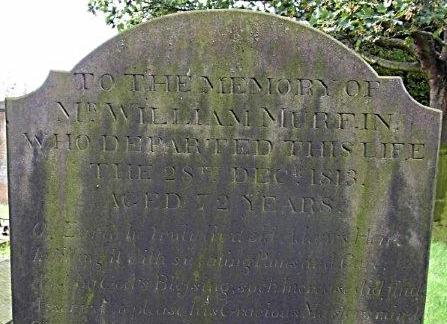
By chance I found the headstone on William Murfin’s grave at St Nicholas, Chiswick. I had already discovered his will, but it threw up a question to which the inscription on this headstone provides the answer.
William Murfin (1741-1813) was head gardener at Chiswick House by 1790 and worked for Georgiana, Duchess of Devonshire, on her Ladies Garden and Pleasure Garden. Trained by Robert Teesdale Senr at Castle Howard, he was recommended for the Chiswick post by the Duke of Portland’s gardener at Welbeck. Murfin’s name appears as witness to the will of a fellow servant in the Devonshire household, Mary Griffiths, in August 1797. He left his Chiswick House post in the winter of 1811/12 when his salary was listed as £60. His name is crossed out in the accounts, with ‘Robert Clues’ written in above – he was to receive £100 a year. By the time of his death at 72, in December 1813, William Murfin had retired to Turnham Green.
His tomb stone carries this verse:
On Earth he truly liv’d old Adam’s heir,
In tilling it with sweating Pains and Care:
And by God’s blessing such increase did find
As served to please his Gracious Master’s mind,
Till from those Earthly gardens he did Rise
Transplanted to the upper Paradise
William Murfin still described himself as ‘gardener’ when he wrote his will in 1813. He was prosperous enough to make bequests involving over £3,200-worth of Bank of England stock which included:
• income and dividends from Bank of England Stock to his good friend Ann Venables of Turnham Green, spinster, for her natural life
• £300 capital stock to his sister Eleanor and her husband William Poyser
• £300 capital stock to his sister Joice, widow of George Clews
• £100 capital stock to his niece Elizabeth Horne, wife of William, carpenter of Whetstone, Middlesex
• £500 to William Murfin, son of my cousin William Murfin, of Bradley, Derbyshire, grocer
• £50 capital stock for her own use to Mrs Anne Allnutt, wife of William Allnutt, of Piccadilly, Middlesex, turner and
• £2,000 of capital stock transferred to cousin William Murfin the elder
The will confirms that his family came from parishes on the Staffordshire/Derbyshire border. Our William’s father was almost certainly the William born in 1716 in Bradley, Derbyshire, whose wife was Ellen; William Murfin the elder died on 5 August 1792 and was buried in Doveridge, also in Derbyshire. His two sisters married local farmers – Eleanor’s husband was William Poyser of Swincoat in Blore, Staffs and Joice married George Clews of Marchington, Staffs.
The Chiswick William Murfin makes no mention of a wife or children in his will, though a John Murfin was buried at St Nicholas in July 1791, around the time that William came to work in Chiswick. (There are only three mentions of the surname in the registers). However, he may have had a son also called William Murfin; the parish registers of St Cuthbert’s, Ackworth, just south of Wakefield, record the baptism of a son of that name to William Murfin, gardener and his wife Sarah, at Low Town, in 1772.
William’s Clews nephews
William bequeathed his ‘stock’ (mentioned separately from Bank of England stock) to his two Clews nephews. Since both were gardeners this must refer to garden stock at Turnham Green where he might have been running a nursery after his retirement from the Chiswick House estate. In his will William describes his nephew Robert Clews as “gardener to his Grace the Duke of Devonshire at Chiswick” and Robert’s brother, Thomas, as “gardener to Rt Hon Lord Bradford at Weston Hall, Staffs”. Robert had taken over from William Murfin at Chiswick on Lady Day 1812 at £100 a year. In addition to the garden stock the nephews were to have the residue; Robert was one of three executors along with William Allnutt and Richard Williams (of the Chiswick Nursery).
The will of Robert Murfin, our William’s brother, suggests that he had a hand in training the next generation. Robert Murfin was gardener at Saltram in Devon; he was ill and died shortly after making his will in August 1798. The owner of the Saltram estate bemoaned his loss in a letter to to a friend, wondering how she was going to replace him. He made his brother his executor and left him the residue of his estate. His main bequest was £600 in 5% bank stock to his three sisters. He left £50 to one of the garden workers, £20 to a godson and £10 to his nephew Robert Clews, ‘labourer at Saltram’, who was working alongside him.
No record has been found of a marriage involving Thomas Clews at Chiswick. However, the parish registers record the baptism on 13 March 1808 of a baby boy born on 9 January 1808. The entry names him as Thomas Clues Murphin, the son of Thomas Clues and Martha Kerrison, and he may have been illegitimate. Perhaps the addition of the second surname of Murfin indicates that William had taken his nephew’s child under his wing. No further record of Thomas Clews Murfin occurs in the Chiswick registers and he is not mentioned in William’s will. A Thomas Clews, farmer, aged 55, is listed in the 1841 Census at Weston Mill Farm near Weston Hall with his wife and three children; perhaps he had become a farmer in his own right after gardening at Weston Hall.
No marriage or burial record has been traced for Robert Clews. However, he has nevertheless left us a significant legacy for as head gardener he must have overseen the major works on the former Morton Hall estate to the east of Burlington’s garden, acquired by the 6th Duke of Devonshire in 1812 – these created the Italian Garden and the long conservatory with gardeners’ bothies behind, and took in the walled gardens to the north. The scale of the works can be judged by a report in The Morning Chronicle on 19 November 1812 which stated that 150 men had been employed in the gardens for the previous six months. He played a part in the Horticultural Society’s gardens (the predecessor of RHS Wisley today) which lay just north of the Chiswick House estate and was made a Fellow of the Society, a sign that he was held in some esteem by his peers. In 1823 he exhibited there a number of varieties of grapes and in 1830 two varieties of apple named after him. He also appeared in the 1830 subscription list to support the Horticultural Society’s garden, contributing five shillings.
Resolving the puzzle
The question posed by William Murfin’s will is who was his ‘good friend’, Ann Venables? Only one other Venables appears in the parish registers at this period; a ‘Robert Venable’ was buried at St Nicholas in January 1779 but there is no evidence that he was related to her. Ann’s will reveals more. There she described herself as ‘spinster’ of Turnham Green, whereas Murfin had called her ‘spinster and servant maid’. The Chatsworth Servants’ Database reveals that she was the Housekeeper, a very senior “servantmaid” indeed, from at least 1774. Her request in the will to be buried in the same grave as her late friend Mr William Murfin raised the second question – was this carried out? She died, aged 72, in December 1814 and we know that her request was fulfilled because her executors added an inscription to William’s headstone which confirms that they were together. They were most probably a couple but unmarried.
Ann left specific furniture and silverware as well as the residue and the funds in the Bank of England to William Murfin’s nephews. As well as a selection of silver cutlery, Robert was to have the white bed furniture and bedding in the white bedroom, a bureau with drawers, chairs and a washstand. Thomas Clews received Anne’s own bedroom furniture, including a mahogany wardrobe, and she left her gold watch to Thomas’s wife. The home sounds as if it is furnished with some taste. Ann did not specify the post of Thomas Clews, but referred to Robert as the Duke of Devonshire’s gardener. Robert was to be one of her executors along with William Allnutt.
According to the will and insurance records Allnutt was a wood turner at 186 Piccadilly. He lived to be over 90 and appears in the 1841 census, next door to the Blackmore family in Stamford Brook (in the north-east corner of Chiswick Parish). Susannah Blackmore and Ann Robarts (living in the house left to them by their father William Blackmore) were also beneficiaries – amongst Ann’s bequests to them was a leather trunk with the initials GR, possibly originally from the royal household. William Murfin had been a witness to the will of their father, William Blackmore, proved in 1799.One other gardener in this circle knew the Blackmores well. Robert Teesdale jnr, who died at Christmas 1804, had lived in Turnham Green since the early 1790s. Two of the witnesses to his will were Susannah Blackmore and her sister Ann.
Some of Ann Venables’ own relatives and neighbours are also mentioned. Ann left money, elegant garments and china ornaments from her bedroom mantelpiece to her cousin, the wife of a vicar in Bengeo in Hertfordshire. Her best clothing was to go to Esther Allnutt, wife of William, one of her executors, and her ‘worst clothing’ was to go to her servant along with £5. The presence of a servant for a woman only recently described as a servant maid herself says something of her status.
So William may have been widowed by the time he came to Chiswick House, certainly had a close relationship with Ann Venables, who was buried with him, and lived in some comfort. He seems to have continued gardening after his nephew took over from him at Chiswick, and had close friends at Turnham Green and Stamford Brook. The links to different estates in England for this one gardening family alone, show how experienced garden specialists were recruited by land owners and moved from one end of the country to the other.
Sources of information
• Chatsworth archives, ms L114/51, Household Establishments No 2, Chiswick Establishment, 25 December 1811. Information from Peter Hammond, 22.05.2014
• Will of Robert Teesdale 1740-1804, PROB 11/1420; described as ‘of Hammersmith’ in will, he lived at Turnham Green in Chiswick Parish by 1790, with his wife Britannia and 3 sons
• Details of early career from David Jacques’ research on Chiswick House gardens, 1980s
• Will of William Murfin TNA PROB 11/1551
• Robert Clews’ grapes, reported in Journal of Science and the Arts vol 15 1823 and apples reported in J C Loudon Gardeners Magazine vol 6 1830
• Will of Robert Murfin, TNA PROB 11/1312
• Will of Ann Venables TNA PROB 11/1579
• Will of William Blackmore TNA PROB 11/1319
• Robert Teesdale’s will, PROB 11/1420
• Letter from Anne Robinson of Saltram, 30 August 1798 PWDRO 1259/2/399
• Bill from Robert Murfin for trees and garden work at Saltram, 1791-3, PWDRO 1259/5/22
Lecture for the London Parks and Gardens Trust, 7-8pm, 12 November 2012 at The Garden Museum SE1 7LB (map)
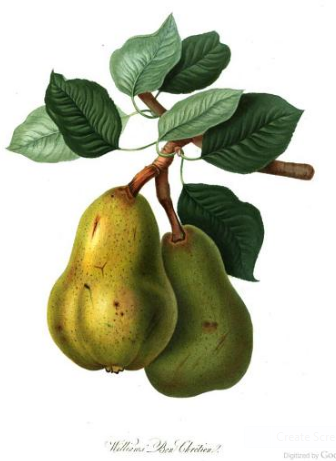
Val Bott will be giving a lecture about some of the nursery gardeners of the Brentford & Chiswick area between 1680 and 1820. Her research has used local history and family history to discover the links between the gardening families and what they grew, rangin from patent elms, through pineapples to Williams pears.
Tickets are available from the London Parks and Gardens Trust at £8 for LPGT members abd Museum Friends and £9 for others.