Eating the past

Feltham First peas

I wrote this short piece, first posted on 19 April 2012, to inaugurate the Jam Yesterday Jam Tomorrow blog for Richmond Environment Trust. This HLF-funded project was concentrating on market gardeners rather than nursery gardeners, and focussed on the 19th and early 20th centuries. They made a model market garden at Marble Hill House and worked plots at Strawberry Hill House in Twickenham as well as events and activities.

Food tastes often change over time and in response many nursery and market gardeners made a determined effort to develop new varieties which appeal to these modern tastes. Despite this constant innovation traditional English fruit and vegetables still survive. Excitingly, it is still possible to obtain seeds and small plants from specialist nurseries and seedsmen, but to identify the Middlesex ones, you will need a little local knowledge.

Lobjoits cos lettuce

Some varieties were named after growers. For example, the Masters’ Hotspur pea was propagated by George Masters of Strand in the Green, probably in the 1720s. Peas had become fashionable and the way to obtain good profits was to produce them early – this is what Masters achieved. The variety is mentioned in many 19th century gardening handbooks but now seems to have disappeared. However, you can still buy seed for Lobjoit’s cos lettuce from a number of the major seed merchants. The Lobjoits, Huguenot immigrants, became well established a market gardeners in Hammersmith and Barnes and then further west at Worton Farm, Isleworth and at Heston Farm before World War 2. Other seeds are associated with places. Feltham First peas seem to have been a 1940s pea, and an early one, which might have competed with Masters’ Hotspur, and easily available today.

There are also many varieties of local fruit that can be found. Raspberries and strawberries were a major Middlesex crop for London’s markets in the 18th and 19th centuries and were grown in Twickenham, Isleworth and Brentford. In the summer women workers from the Welsh border counties came to the area to do the picking. They began at about 3am, giving them time to walk to the market, then return, and take the next picking into town the same day. The strawberries were placed in small conical baskets called punnets – only one fruit could fall into the pointed base, then the sloping sides distributed the weight ensuring that the upper fruit did not crush that below.

Keens seedling strawberry

With strawberries local gardeners were competing for size. Benjamin Horne, a Georgian Brentford gardener, propagated the pine strawberry, using seed imported from America – this is the fore-runner of the large strawberries favoured today. In 1797 Edward West of Twickenham was described as a ‘skilful gardener noted for production of our best and finest fruits, particularly the raspberry, some of which are uncommonly large’.

Another local market gardener Michael Keens from Isleworth, raised the first very large-fruited market variety of strawberry in 1806. He wrote to the Royal Horticultural Society in January 1814, describing how he had sown the seed of the White Chili strawberry, along with a great many others in 1806 and had discovered that one of the Chili seedlings was very different from, and far superior to, its companions. This became the Keens Imperial. The Society awarded him a silver cup and published a description of the berry in Notices of New or Remarkable Varieties of Fruits, ripened in the summer and autumn of the year 1821. Keens’ Strawberry’s great merits were said to be that it is very large, very good, and very prolific. ‘It forces better than any other, carries extremely well, and bears its fruit high enough above the earth to keep it free from the soil. No Strawberry has the same vigorous appearance as this’.

If this appeals to your appetite and you would like to find out more Thomas Etty is a small firm which sells many traditional varieties by mail order via an excellent online catalogue has information about the dates of introduction of some vegetables and is worth a look.”

Discover more about local fruit and vegetables in these other articles on this web-site:
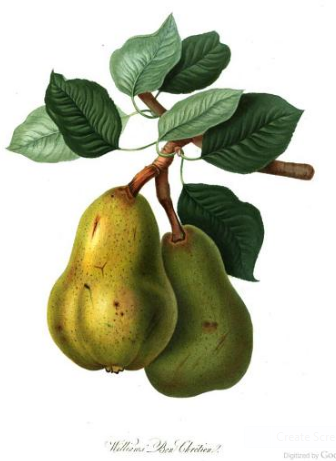
The Chiswick Nursery for the Williams pear
The Scott Brothers for pineapples
The Ronalds of Brentford for apples
The Masters family for kitchen garden plants sold from Strand on the Green

The Murfin family

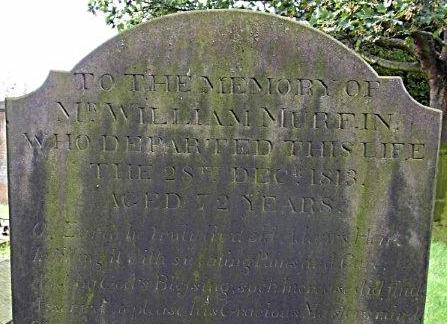
By chance I found the headstone on William Murfin’s grave at St Nicholas, Chiswick. I had already discovered his will, but it threw up a question to which the inscription on this headstone provides the answer.

William Murfin (1741-1813) was head gardener at Chiswick House by 1790 and worked for Georgiana, Duchess of Devonshire, on her Ladies Garden and Pleasure Garden. Trained by Robert Teesdale Senr at Castle Howard, he was recommended for the Chiswick post by the Duke of Portland’s gardener at Welbeck. Murfin’s name appears as witness to the will of a fellow servant in the Devonshire household, Mary Griffiths, in August 1797. He left his Chiswick House post in the winter of 1811/12 when his salary was listed as £60. His name is crossed out in the accounts, with ‘Robert Clues’ written in above – he was to receive £100 a year. By the time of his death at 72, in December 1813, William Murfin had retired to Turnham Green.

His tomb stone carries this verse:

On Earth he truly liv’d old Adam’s heir,
In tilling it with sweating Pains and Care:
And by God’s blessing such increase did find
As served to please his Gracious Master’s mind,
Till from those Earthly gardens he did Rise
Transplanted to the upper Paradise

William Murfin still described himself as ‘gardener’ when he wrote his will in 1813. He was prosperous enough to make bequests involving over £3,200-worth of Bank of England stock which included:

• income and dividends from Bank of England Stock to his good friend Ann Venables of Turnham Green, spinster, for her natural life
• £300 capital stock to his sister Eleanor and her husband William Poyser
• £300 capital stock to his sister Joice, widow of George Clews
• £100 capital stock to his niece Elizabeth Horne, wife of William, carpenter of Whetstone, Middlesex
• £500 to William Murfin, son of my cousin William Murfin, of Bradley, Derbyshire, grocer
• £50 capital stock for her own use to Mrs Anne Allnutt, wife of William Allnutt, of Piccadilly, Middlesex, turner and
• £2,000 of capital stock transferred to cousin William Murfin the elder

The will confirms that his family came from parishes on the Staffordshire/Derbyshire border. Our William’s father was almost certainly the William born in 1716 in Bradley, Derbyshire, whose wife was Ellen; William Murfin the elder died on 5 August 1792 and was buried in Doveridge, also in Derbyshire. His two sisters married local farmers – Eleanor’s husband was William Poyser of Swincoat in Blore, Staffs and Joice married George Clews of Marchington, Staffs.

The Chiswick William Murfin makes no mention of a wife or children in his will, though a John Murfin was buried at St Nicholas in July 1791, around the time that William came to work in Chiswick. (There are only three mentions of the surname in the registers). However, he may have had a son also called William Murfin; the parish registers of St Cuthbert’s, Ackworth, just south of Wakefield, record the baptism of a son of that name to William Murfin, gardener and his wife Sarah, at Low Town, in 1772.

William’s Clews nephews
William bequeathed his ‘stock’ (mentioned separately from Bank of England stock) to his two Clews nephews. Since both were gardeners this must refer to garden stock at Turnham Green where he might have been running a nursery after his retirement from the Chiswick House estate.  In his will William describes his nephew Robert Clews as “gardener to his Grace the Duke of Devonshire at Chiswick” and Robert’s brother, Thomas, as “gardener to Rt Hon Lord Bradford at Weston Hall, Staffs”. Robert had taken over from William Murfin at Chiswick on Lady Day 1812 at £100 a year. In addition to the garden stock the nephews were to have the residue; Robert was one of three executors along with William Allnutt and Richard Williams (of the Chiswick Nursery).

The will of Robert Murfin, our William’s brother, suggests that he had a hand in training the next generation. Robert Murfin was gardener at Saltram in Devon; he was ill and died shortly after making his will in August 1798. The owner of the Saltram estate bemoaned his loss in a letter to to a friend, wondering how she was going to replace him. He made his brother his executor and left him the residue of his estate. His main bequest was £600 in 5% bank stock to his three sisters. He left £50 to one of the garden workers, £20 to a godson and £10 to his nephew Robert Clews, ‘labourer at Saltram’, who was working alongside him.

No record has been found of a marriage involving Thomas Clews at Chiswick. However, the parish registers record the baptism on 13 March 1808 of a baby boy born on 9 January 1808. The entry names him as Thomas Clues Murphin, the son of Thomas Clues and Martha Kerrison, and he may have been illegitimate. Perhaps the addition of the second surname of Murfin indicates that William had taken his nephew’s child under his wing. No further record of Thomas Clews Murfin occurs in the Chiswick registers and he is not mentioned in William’s will. A Thomas  Clews, farmer, aged 55, is listed in the 1841 Census at Weston Mill Farm near Weston Hall with his wife and three children; perhaps he had become a farmer in his own right after gardening at Weston Hall.

No marriage or burial record has been traced for Robert Clews. However, he has nevertheless left us a significant legacy for as head gardener he must have overseen the major works on the former Morton Hall estate to the east of Burlington’s garden, acquired by the 6th Duke of Devonshire in 1812 – these created the Italian Garden and the long conservatory with gardeners’ bothies behind, and took in the walled gardens to the north. The scale of the works can be judged by a report in The Morning Chronicle on 19 November 1812 which stated that 150 men had been employed in the gardens for the previous six months. He played a part in the Horticultural Society’s gardens (the predecessor of RHS Wisley today) which lay just north of the Chiswick House estate and was made a Fellow of the Society, a sign that he was held in some esteem by his peers. In 1823 he exhibited there a number of varieties of grapes and in 1830 two varieties of apple named after him. He also appeared in the 1830 subscription list to support the Horticultural Society’s garden, contributing five shillings.

Resolving the puzzle
The question posed by William Murfin’s will is who was his ‘good friend’, Ann Venables? Only one other Venables appears in the parish registers at this period; a ‘Robert Venable’ was buried at St Nicholas in January 1779 but there is no evidence that he was related to her. Ann’s will reveals more. There she described herself as ‘spinster’ of Turnham Green, whereas Murfin had called her ‘spinster and servant maid’. The Chatsworth Servants’ Database reveals that she was the Housekeeper, a very senior “servantmaid” indeed, from at least 1774. Her request in the will to be buried in the same grave as her late friend Mr William Murfin raised the second question – was this carried out? She died, aged 72, in December 1814 and we know that her request was fulfilled because her executors added an inscription to William’s headstone which confirms that they were together. They were most probably a couple but unmarried.

Ann left specific furniture and silverware as well as the residue and the funds in the Bank of England to William Murfin’s nephews. As well as a selection of silver cutlery, Robert was to have the white bed furniture and bedding in the white bedroom, a bureau with drawers, chairs and a washstand. Thomas Clews received Anne’s own bedroom furniture, including a mahogany wardrobe, and she left her gold watch to Thomas’s wife.  The home sounds as if it is furnished with some taste. Ann did not specify the post of Thomas Clews, but referred to Robert as the Duke of Devonshire’s gardener. Robert was to be one of her executors along with William Allnutt.

According to the will and insurance records Allnutt was a wood turner at 186 Piccadilly. He lived to be over 90 and appears in the 1841 census, next door to the Blackmore family  in Stamford Brook (in the north-east corner of Chiswick Parish). Susannah Blackmore and Ann Robarts (living in the house left to them by their father William Blackmore) were also beneficiaries – amongst Ann’s bequests to them was a leather trunk with the initials GR, possibly originally from the royal household. William Murfin had been a witness to the will of their father, William Blackmore, proved in 1799.One other gardener in this circle knew the Blackmores well. Robert Teesdale jnr, who died at Christmas 1804, had lived in Turnham Green since the early 1790s.  Two of the witnesses to his will were Susannah Blackmore and her sister Ann.

Some of Ann Venables’ own relatives and neighbours are also mentioned. Ann left money, elegant garments and china ornaments from her bedroom mantelpiece to her cousin, the wife of a vicar in Bengeo in Hertfordshire. Her best clothing was to go to Esther Allnutt, wife of William, one of her executors, and her ‘worst clothing’ was to go to her servant along with £5. The presence of a servant for a woman only recently described as a servant maid herself says something of her status.

So William may have been widowed by the time he came to Chiswick House, certainly had a close relationship with Ann Venables, who was buried with him, and lived in some comfort. He seems to have continued gardening after his nephew took over from him at Chiswick, and had close friends at Turnham Green and Stamford Brook. The links to different estates in England for this one gardening family alone, show how experienced garden specialists were recruited by land owners and moved from one end of the country to the other.

Sources of information

• Chatsworth archives, ms L114/51, Household Establishments No 2, Chiswick Establishment, 25 December 1811. Information from Peter Hammond, 22.05.2014
• Will of Robert Teesdale 1740-1804, PROB 11/1420; described as ‘of Hammersmith’ in will, he lived at Turnham Green in Chiswick Parish by 1790, with his wife Britannia and 3 sons
• Details of early career from David Jacques’ research on Chiswick House gardens, 1980s
• Will of William Murfin TNA PROB 11/1551
• Robert Clews’ grapes, reported in Journal of Science and the Arts vol 15 1823 and apples reported in J C Loudon Gardeners Magazine vol 6 1830
• Will of Robert Murfin, TNA PROB 11/1312
• Will of Ann Venables TNA PROB 11/1579
• Will of William Blackmore TNA PROB 11/1319
• Robert Teesdale’s will, PROB 11/1420
• Letter from Anne Robinson of Saltram, 30 August 1798 PWDRO 1259/2/399
• Bill from Robert Murfin for trees and garden work at Saltram, 1791-3, PWDRO 1259/5/22

Brentford & Chiswick Nursery Gardeners

Morning Chronicle 9 Feb 1837

Lecture for the London Parks and Gardens Trust, 7-8pm, 12 November 2012 at The Garden Museum SE1 7LB (map)

Val Bott will be giving a lecture about some of the nursery gardeners of the Brentford & Chiswick area between 1680 and 1820. Her research has used local history and family history to discover the links between the gardening families and what they grew, rangin from patent elms, through pineapples to Williams pears.

Tickets are available from the London Parks and Gardens Trust at £8 for LPGT members abd Museum Friends and £9 for others.

A confusion of Lewis Kennedys

For the historian, the practice of naming sons after fathers and/or grandfathers can cause no end of confusion. This has certainly been the case with a family of Scots gardeners called Kennedy.What follows is an attempt to clarify which gardeners called Lewis Kennedy had links with the Chiswick area.

A Lewis Kennedy prepared Notitiae, elegant notes and sketches, which survive in the archives at Chatsworth. These proposed improvements to the estate immediately to the east of the grounds of Chiswick House, which the 6th Duke of Devonshire purchased in 1812. This had been the property of Sir Stephen Fox, who invested in a magnificent house and grounds there in the early 1680s. It passed through successive owners after Fox’s death in 1716. From 1758 it was the home of the Earl and Countess of Morton and was later known as  Moreton Hall. The Duke’s purpose was to enlarge his gardens and the Hall was soon demolished. His enhancements include the Italian garden and conservatory, the home of the Chiswick House Camellia Festival.

This Lewis Kennedy was born in 1789 and, despite his youth, had already worked for the Empress Josephine in France, obtaining permission to travel and export plants to France during the Napoleonic Wars. [This contract was almost certainly facilitated by a wealthy London merchant, George Hibbert (1757-1837), who was an impressive gardener, funding plant hunters and acting as a silent partner in the Vineyard Nursery. He was on intimate terms with Josephine and recommended that Kennedy be engaged to advise her.] The son of John Kennedy (1759-1842), Lewis’s expertise at such a young age must have come from working at the family’s Vineyard Nursery, the famous concern of Kennedy and Lee on the site where the Olympia exhibition halls were later built. John Kennedy was one of seven children, including three sets of twins. Two sons were both baptised Lewis but only the two other siblings – John and Amelia – survived to adulthood. Amelia Emily Kennedy married William Bridgewater Page; he trained at the Vineyard Nursery and in 1815 launched his own nursery in Southampton.

Kennedy’s scheme for Trebartha Castle that was never carried out

Lewis Kennedy (1789-1877) produced albums or “Notitiae” for other clients. In 2011 The Huntington Library in California acquired one of these, for Trebartha Hall in Cornwall. Kennedy’s proposals are set out in 12 manuscript pages, supplemented with 8 watercolor sketches and 5 pen-and-wash vignettes with verses, bound in olive green leather to seduce his client! Kennedy wrote “I have ventured to annex, a small slip of paper to shew the possibilities of Trebartha in the Castle style & at trifling more expence …” Seductive stuff but never implemented!

Another Lewis Kennedy (d 1782), born in Scotland, is said to have established this nursery in the first half of the 1740s with a fellow Scot, James Lee, from Selkirk (1715-1795). Lee had served his apprenticeship with Philip Miller, also a Scot, at the Chelsea Physic Garden and Loudon stated that he had then worked at Whitton Park and on the Syon Estate. John H Harvey suggested that this Lewis Kennedy was grandfather of the author of the Chiswick Notitiae. He identified him also as the Lewis Kennedy who was gardener to Lord Wilmington at Chiswick, when he subscribed to Philip Miller’s Dictionary in 1731, to Furber’s Short Introduction in 1733 and to Rocque’s map of London and Environs in 1741. Lord Wilmington showed his house and garden to Sir John Clerk of Penicuik in 1733; he wrote that he “shewed me all his gardens where there is a vast variety of Trees, Shrubs, plants & flowers…. One Kennedy a Scotsman is Gardiner & has been with him many years. I found the Ananis or pineapple very forward – he has a vast stock of Tulips Hyacinths Anemonies & Ranunculuses…. He has a neat Library for phylosophie & Botanie books of all kinds”.

Thomas Kirton, the local blacksmith, had a forge a short walk from Lord Wilmington’s house (now under the Hogarth Business Park). Kirton had worked for Lord Wilmington at Chiswick and was recommended by him to the Earl of Northampton. Kirton’s will included a bequest of a mourning ring to a Lewis Kennedy in 1755, and it makes sense that this refers to Lord Wilmington’s gardener. (Kirton’s mother, Mary, had kept up the family forge after her husband’s death and her name appears on invoices for smith’s work for Lord Burlington at Chiswick House and in the accounts in the 1720s, amongst the archives at Chatsworth).

The Gentleman’s Magazine, vol xiii, carried a report of the death of another Lewis Kennedy, gardener to the Duke of Bedford on the Woburn estate. Kennedy had cut his throat and died instantly; his suicide note, dated 6 October 1743, was printed in full. It referred to a long period of mental illness and instability, and asked for compassion rather than ridicule, but Kennedy was rational enough to have sorted out practical matters, leaving with his suicide note an IOU from Alexander Brown confirming that he owed Kennedy £10 and also a letter to Brown which asked him to ensure that Kennedy had a decent Christian burial and that his box of possessions should be sent to his nephew who was gardener to the Earl of Northampton.

The Lewis Kennedy who entered into a partnership with Lee soon after his uncle’s tragic death must have been this nephew. He was most likely the son of Thomas Kennedy (brother to the gardener at Woburn) who died in 1721 a few months after his son’s birth.

Sir Stephen Fox’s house was purchased by Lord Wilmington from Fox’s son and inherited by the Earl of Northampton – so the estate which today forms the eastern segment of the grounds of Chiswick House, comprising the Italian garden, the conservatory full of camellias and the series of walled gardens to the north, played a part in the horticultural lives of two of the Kennedys. One managed it for Lord Wilmington (and seems to have gone on to work for its next owner, the Earl of Northampton) and the other, his grandson, made ambitious and audacious proposals for its modification as a young man in 1812-14.

Sources of information:

John H Harvey, Early Nurserymen, Phillimore, 1974

E J Willson, James Lee and the Vineyard Nursery, Hammersmith, Hammersmith Local History Group, 1961 (Eleanor Willson obtained family information from descendants of both the Lee and Kennedy families)

Huntington Library, Trebartha Notitiae  http://www.huntington.org/huntingtonlibrary

Chatsworth Archives: purchase of Morton Hall, Kennedy’s Notitiae for this estate, and Chiswick House accounts used in  R T Spence, Chiswick House and Its Gardens 1726-1732, Burlington Magazine, Vol. 135, No 1085, 1993

Gillian Clegg, Moreton Hall, Brentford & Chiswick Local History Journal no 9 (2000)

Sally Jeffrey, Fox’s “Extraordinarily Fine” Chiswick Garden, Brentford & Chiswick Local History Journal no 15, 2006

The Gentleman’s Magazine, xiii – note about suicide of Duke of Bedford’s gardener

Family history references traced and/or checked via www.ancestry.co.uk

Information from Richard Hewlings, English Heritage about recommendation to the Earl of Northampton.

www.georgehibbert.com – a website about the Hibbert family run by Nick Hibbert Steele

Further Reading:

Jan Woudstra,The Italian Garden at Chiswick House in English Heritage Historical Review 5, 2010

Clare Howard, The influence of the Kennedy family at Croxdale Hall, Historic England Research issue 5, 2017

Note: This piece has prompted interest from several descendants of the gardening Kennedys – I am grateful for the information they have passed on and have been happy to share my research. Yesterday I took two of them for a walk around the Italian Garden and the Duke’s Avenue at Chiswick House to explore the design ideas Lewis Kennedy (1789-1877) had conceived in 1814.  2 July 2012